What Is a Tactical Medic?

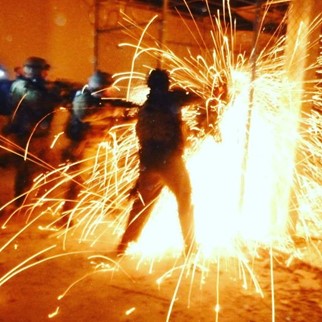
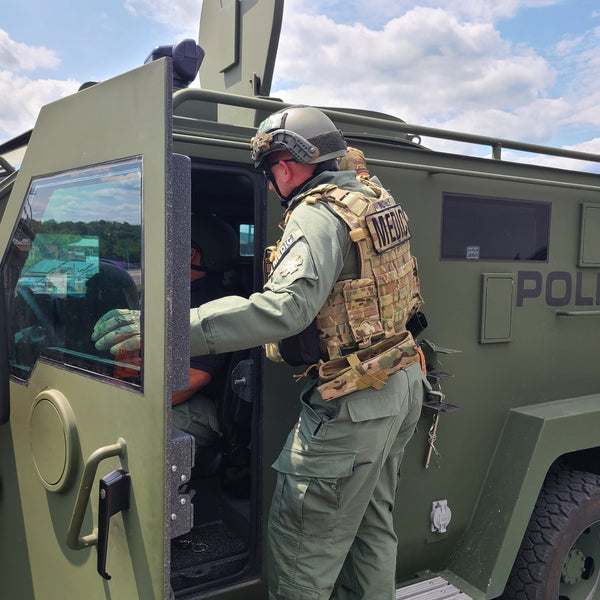
Too many people picture a tactical medic as a door kicker who wears a cheesy morale patch about tactical medicine, thinks it looks badass, and carries every piece of gear that might save a life. The picture also comes from a phrase that gets used as a compliment, which is docs with Glocks. The national panel that wrote the competencies for tactical medical providers described a different job, and casualty care was one part of it. This Field Note covers the rest of that job, which includes sports medicine, mission planning, pharmacology, the medical conditions of the people on the team, and sanitation. It also explains why the stack is the wrong place for a medic who is not a sworn officer, and it sets the role beside the military medic it is most often compared with.
The answer most people give
Ask what a tactical medic does and the answer arrives within a second or two, and it usually includes a door. They stack up with the team, carry the tourniquets, pack the wound, and keep a wounded teammate alive until the ambulance arrives. Parts of that answer are accurate, and together they describe the minutes of a career that get the most attention. Most of the career happens in the hours and weeks around those minutes, and the image of the stack hides it. TCCC and TECC are the two sets of guidelines most commonly associated with tactical medicine, so the role has come to be defined by them.
The national panel behind the 2014 revision of the tactical emergency medical support competencies included members from the Departments of Defense, Homeland Security, Justice, and Health and Human Services. Federal, state, and local law enforcement officers sat on it as well. The list the panel started from had seventeen domains, and Tactical Combat Casualty Care methodology was the first of them. It sat alongside hemostasis, airway, breathing, circulation, vascular access, and medication administration. It also sat alongside medical planning, human performance factors and health surveillance, environmental factors, and hazardous materials management.
The revision added four domains, which were Tactical Emergency Casualty Care, tactical familiarization, legal aspects of TEMS, and mass casualty triage. The health surveillance domain appears in the revised table as Force Health Protection. Casualty care, in other words, is one part of the national consensus framework for what a tactical medical provider has to know.
Many of the other domains concern planning, health protection, environmental conditions, law, and hazardous materials, and several describe work that happens long before anyone is hurt. The American College of Emergency Physicians points the same direction in its policy statement. It calls tactical emergency medical support an integral part of the tactical unit and says its providers can offer medical insight during training, mission planning, and deployment.
Tactical casualty care is one part of the national consensus framework for tactical medical providers.
What TCCC and TECC are
TCCC grew out of military combat casualty care. TECC adapted the same principles for civilian high threat settings, where the casualty might be a teammate, a bystander, or a subject. Both organize care by phase, which matches the intervention to how much danger the casualty and the rescuer are in. TCCC calls its phases care under fire, tactical field care, and tactical evacuation care, and TECC calls them direct threat care, indirect threat care, and evacuation care. Each set of guidelines answers one question, which is what to do for an injured person at a given point in an operation, and each answers it well.
Neither set of guidelines says who the medic is responsible for before the operation starts. Other questions belong to the remaining competency domains and to the medical director. They include what the medic needs to know about the team, what the weather and the building will do to it, how it stays healthy through a week of training, and what the medic is permitted to give. These answers shape how well casualty care goes when it is needed. A tactical medic who knows TCCC and TECC thoroughly understands the framework for tactical casualty care, and that knowledge is one part of the job.
Docs with Glocks
I have heard the phrase docs with Glocks used as a compliment and as a goal. It describes a person who wants the clinical title and the operator's role at the same time, and it shows which part of the job that person is picturing. The picture has a door, a rifle, and a patch in it. It rarely has a roster, a sick call, a training plan, or a medication list, and those are the parts of the job that take up most of the hours.
The image costs the field something. People who want the image train for the image, and agencies that hire for it end up with a medic whose strongest skills are the ones the team needs least often. None of the domains in the original competency list or the revised table asks the medic to function as an operator. The panel included tactical familiarization because the medic has to understand the team's world, which is the full extent of what that domain asks.
The data on what hurts a tactical team describes a different job. Physical training was a leading source of injury in the Australian and New Zealand survey, and cardiovascular disease is the leading medical cause of death related to duty among tactical athletes. Those facts point to musculoskeletal evaluation, heat management, medication review, hydration, sleep, and sanitation. That work happens in locker rooms, parking lots, and training days where there is no audience.
The calls look the same way. The Maryland State Police Tactical Medical Unit reviewed 1,042 missions from 2007 through 2013 and 367 patient encounters, and its authors reported that most chief complaints were not life threatening. Musculoskeletal pain or injury led on warrant service, sick call and musculoskeletal injury led at training, and heat illness and dehydration led at mass gatherings. A national review of 2012 EMS records found pain was the most common symptom at tactical incidents, firearm assault was coded in 14.8 percent of events, and no patient was documented as receiving a tourniquet.
That matches my own experience. A tactical medic will most likely treat more blisters and stings than gunshot wounds. People still tease me for being an Eagle Scout, and most of the skills I use on a typical MIRT call I knew before I hit puberty. The advanced training matters for the call that needs it, and it sits on top of basic skills that get used on most of the others.
Most of the job happens where there is no audience.
A medic who is more interested in the glamour may overlook that work, and the team pays for it. The operator who is overheating in armor, taking something from the pharmacy counter before a call, or hiding a knee that has been swelling for a month needs a medic who has already earned the right to ask. Jeff Brytczuk wrote in an earlier Field Note, From Medic to "Doc", that the medic should make sure the team has water and clean socks, and the line is a fair description of the job. The standing to tell a strong operator to sit out comes from hours spent on those things.
The stack is not where the medic works
TJ wrote about the Liabilities, Independents, and Assets model in an earlier Field Note, and it applies directly here. A liability is a person other people have to protect, an independent is a person who can protect themselves, and an asset is a person who adds to the team's capability and is integrated into how it operates. The Rescue Task Force shows the tension, because EMS personnel entering a warm zone under law enforcement protection can reach casualties earlier, and the team's deployment also requires officers to provide security. A sworn officer who is also a paramedic can function as an asset in both roles, which is the reason that arrangement exists in some systems, although it brings difficulties of its own that a later section covers.
A medic who is not a sworn officer and is placed in the stack lands in the wrong category. Without law enforcement authority and tactical training, that medic is a liability, or at best an independent where the jurisdiction permits a defensive firearm. Neither description is what a team needs from the person responsible for its medical care. The legal domain in the national competencies adds another layer, because it covers how laws treat nonsworn support personnel and notes that the case law on their liability is limited.
Sworn status alone does not make someone an asset either. A sworn paramedic without tactical training creates the same problems, and the question for any medic is whether training, authority, and assigned responsibilities add to the mission or add responsibilities for everyone else. That question is the reason the sworn medic gets a section of its own below.
The second problem limits where the medic can treat. Medical care during an entry is usually constrained by the conditions TCCC calls care under fire and TECC calls direct threat care, and it comes down to a short list of skills. Return fire and take cover has been part of TCCC care under fire since the beginning, and the May 2026 guidelines still start with it. They then direct the casualty to control bleeding by self aid if able and call for a limb tourniquet. The 2017 TECC guidelines for BLS and ALS providers list threat mitigation, moving the casualty to safety, a tourniquet for life threatening bleeding, and considering a position that protects the airway.
A medic who spends the operation in the stack can use little beyond those skills, and only when the stack's own task leaves a free hand. It makes more sense to train the operators in those basics, which are getting off the X and applying tourniquets, and to put the medic where the medic's skills can apply. A medic at the last point of cover or the casualty collection point can work the MARCH sequence of massive hemorrhage, airway, respiration, circulation, and hypothermia, the sequence the StatPearls review ties to tactical field care. That medic is also still available if a teammate is hit.
A medic committed to the entry puts the team's dedicated medical capability at the point of greatest risk.
None of this contradicts what Jeff Brytczuk wrote in From Medic to Doc, where he said a medic should learn how the stack moves, understand the team's tactics and weapons, train with the team, and shoot well. That knowledge puts the medic in the right place when the stack makes entry and earns the trust of the people who made it. It is knowledge in service of the medical role, and the entry belongs to the operators.
The team is the patient before anyone is hurt
The term tactical athlete came out of the strength and conditioning field. It describes tactical professionals whose jobs require unique physical training strategies aimed at job performance. In September 2026 the American College of Cardiology and the American Heart Association published a joint scientific statement on the cardiovascular care of tactical athletes. The statement defines the population as military personnel, firefighters, law enforcement officers, emergency medical responders, astronauts, and pilots, and it estimates that more than four million Americans serve in those roles. It identifies cardiovascular disease as the leading medical cause of death related to duty in that group.
The statement recommends a history and physical for all tactical athletes, and an ECG for those under forty who have significant cardiovascular strain or mission critical roles. It says fitness for duty decisions should weigh the risk to teammates, the mission, and the public along with the health of the individual. It also names conditions that the operation itself can amplify, including heat, dehydration, sleep deprivation, and psychological stress. Organizations are asked to maintain emergency action plans and rapid access to an AED. Most of those factors develop during training and operations, which is where the medic usually stands.
Knowing the team's medical conditions starts with knowing the roster before the call. The working list includes known cardiac conditions, asthma, diabetes, seizure history, serious allergies and what the person carries for them, prior concussions, recent injuries and surgeries, and current medications. A teammate who goes down in a stairwell at the end of a long night is a different patient to the medic who holds that list. The medic who meets the same teammate for the first time is still gathering history while the first medic is already asking the right questions.
That information belongs to the team member, and the medic's relationship to it depends on the agency, the state, and whether the medic is treating members or supporting the team. The national competencies include a legal aspects domain that covers patient confidentiality and scope of practice based on certification and jurisdiction. A StatPearls review of the laws affecting tactical medicine advises well outlined tactics, techniques, and procedures and memoranda of understanding that protect the provider and the team served. A written agreement among the medic, the medical director, and the agency settles the practical side before the first call. It covers what the medic collects, who sees it, and what happens to it.
Command may need to know whether an operator is fit for an assignment without needing the diagnosis, the medication list, or the full history. The ACC and AHA statement treats fitness for duty as a decision that weighs the individual, the teammates, the mission, and the public. Formal clearance and return to duty decisions belong to the appropriate licensed clinician and the medical director, and the medic's part is to bring concerns to them.
Stress and fatigue belong on the same list. The ACC and AHA statement names sleep deprivation and psychological stress among the conditions an operation can amplify, and fatigue or sleep deprivation was among the most common complaints on the Maryland unit's warrant service missions. The medic is not necessarily a mental health specialist. A medic who knows the team can notice changes in behavior, performance, or health that warrant further evaluation, often before anyone outside the team does, and can bring them to the right resource.
On my team the medics are also responsible for the team's medical training. The remote assessment and surrogate care domain points toward a teammate who may have to act on instruction when the medic cannot reach a casualty, and the medic who trains the team is preparing for that. The same medic knows the roster, the formulary, and the plan, so the teaching matches what the team will face. The aim is a team that can perform self aid and buddy aid, so that its medical capability does not depend on one person.
The medics also assist with fit testing for the team's masks. OSHA's respiratory protection standard requires a physician or other licensed health care professional to evaluate a person first. The fit test follows before first use of a tight fitting facepiece respirator, whenever the facepiece changes, and at least once a year. Facial scarring, dental changes, or a major weight change call for another test. A medic who tracks the roster's injuries and surgeries is placed to notice those changes. How the standard applies to a given agency is a question for its safety officer.
Sports medicine for people who train like athletes
A 2026 survey of nine Police Tactical Group units in Australia and New Zealand reached 132 officers, about 31 percent of that population. Of the 105 who had been injured during their tactical careers, 70 percent attributed an injury to workplace physical training, 50 percent to operational activities, and 40 percent to skills training. Occupational load was being worn at the time of injury in 87 percent of the operational injuries and 79 percent of the skills training injuries.
The authors concluded that physical training is a leading source of injury and that load carriage is often involved. The figures come from one region, rest on what officers remembered and reported, and are shares of injured respondents, so one officer can appear in more than one category. They still point at something a trauma course does not cover, which is that physical training is a significant source of injury and an opportunity for preventive medicine.
These findings fit a broader picture. A critical review of sixteen studies of musculoskeletal injury in law enforcement officers found reported incidence ranging from 240 to 2,500 injuries per 1,000 personnel per year. Sprains and strains were the most common type of injury in every one of the five studies that reported it. The authors rated the methodological quality of the evidence as poor, which limits how far the numbers can be pushed. The direction of the finding is consistent, and the injuries that tactical personnel report are largely musculoskeletal, with a meaningful share happening in training.
Physical training is a leading source of injury on a tactical team.
The disciplines that sports medicine developed for this problem transfer directly to a tactical team. They include evaluating the acute injury on the spot, tracking injuries across the roster so patterns show up, making return to duty decisions with a physician, and watching how training load and carried load change over time. A medic who works this way is following the injuries that cost the team its people, and the work looks nothing like a trauma scenario. It also puts the medic in the room when the training schedule is built, which is where some of those injuries can be prevented.
Heat belongs in the same conversation because a tactical team trains in armor through the summer. A review written for special operations medics describes exertional heat stroke as a serious and often fatal injury that is common in military and special operations settings. Its authors state that planning, quick diagnosis, and aggressive treatment can substantially reduce deaths, and that rapidly lowering core body temperature is the main treatment. They also advise watching for electrolyte abnormalities, rhabdomyolysis, acute kidney failure, and liver injury. Every one of those steps is easier on a team whose medic has already seen the training plan, the forecast, and the water supply.
Mission planning starts before the call goes out
Medical Planning is its own domain in the national competencies, and the ACEP policy statement places the medic in training, mission planning, and deployment. The medic reads an operation the way the team leader does and asks different questions of it. Those questions concern how many people will be on location, what the environment will do to the team at that hour, and how far away the nearest trauma center is. They also concern whether that trauma center can take the kind of patient the operation could produce tonight.
The planning questions continue with where the casualty collection point is, which extraction routes exist and who controls them, and where the ambulance is staged. The ambulance crew needs to know the plan and the radio channel before the operation starts. Hazards on location beyond the people belong on the list too. The answers go in the operations plan as a medical annex, or at minimum a line in the briefing, so that every member of the team knows the medical plan.
One of my teammates is working on how our medics can use ATAK to coordinate hazards, landing zones, and ERs on a call. ATAK began as a military situational awareness tool, and the Air Force Research Laboratory and its lead developer opened it to civilian government agencies in 2013. A Samsung article describes it as layering maps, weather, and team positions on one map that users can mark up, which it says reduces radio chatter. The medical plan above, with its collection point, staging area, and routes, belongs on a map the whole team sees, subject to the confidentiality agreement described earlier.
Other domains cover environmental factors, hazardous materials management, mass casualty triage, and remote assessment and surrogate care. The last of those suggests that the medic cannot always reach a casualty and that a teammate may have to act on instruction. That is a reason to rehearse the medical plan with the whole team and to keep it short enough that people remember it under stress.
Pharmacology of two kinds
The first kind is the medic's own formulary. The competency list covers it under medication administration, and the medic's authority to carry and give anything comes from the medical director and the rules of the jurisdiction. The National Association of EMS Physicians and the National Association of State EMS Officials have issued a joint position statement on medical direction for operational EMS programs. In practice, a physician decides what is in the bag, who may use it, and under what protocol. The medic's job is to know every item in the bag well, including indications, contraindications, interactions, and what to do when it fails to work.
The second kind is the medications the team members take themselves, whether prescribed, bought over the counter, or sold as supplements. The CDC clinician guidance on heat and medications lists many classes that raise the risk of heat illness. Antihistamines with anticholinergic properties, including diphenhydramine and doxylamine, reduce sweating. Diuretics cause volume depletion and electrolyte imbalance, and beta blockers reduce skin blood vessel dilation and sweating. Amphetamine and methylphenidate raise body temperature, and NSAIDs add a risk of kidney injury when a person is dehydrated.
The CDC notes that its list is not comprehensive, and a sleep aid or allergy tablet from the pharmacy counter belongs on the team's list as much as a prescription does. Medications also change what a casualty looks like. A patient on a beta blocker may not mount the heart rate that the Field Note on compensated shock taught you to watch for. A patient on an anticoagulant or an antiplatelet has a different relationship with bleeding than a patient on neither, and the ACC and AHA statement lists anticoagulation status among the factors to weigh for tactical athletes.
A teammate's medications can change how they sweat, how their heart responds to stress, and how they bleed.
None of this requires the medic to prescribe or adjust anything. It requires that the medic ask and keep the answers current under the confidentiality agreement described above. It also requires bringing them to the physician when a teammate's medications meet the day's work, as a diuretic does on a hot training day. In From Medic to Doc, Jeff Brytczuk describes a protocol meeting where someone asked which medic would tell a SWAT operator to sit out because of something he took. His answer is that the medic does, and that this is the job.
Sanitation, the unglamorous domain
The Army's field hygiene and sanitation manual states that historically around 80 percent of reported casualties among U.S. military personnel have been attributed to disease and nonbattle injury. The same manual describes field sanitation teams that train soldiers in preventive medicine measures and advise commanders. Its chapters cover subjects as plain as inspecting for lice and choosing a campsite. The figure is historical and describes military deployments, not civilian tactical teams, and it explains why the Army trains sanitation teams inside its units.
A civilian tactical team does not usually spend months in the field. It does spend long hours in staging areas, shares vehicles and equipment, works in dwellings of every condition, and sometimes deploys to disasters where water and food are uncertain. Hand hygiene, food and water safety, waste handling, skin and wound care, cleaning of armor, helmets, and gloves after body fluid exposure, and decontamination after a hazardous materials entry all belong to the medic in practice.
Force health protection is the term the competency list now uses for the group of measures that keep a team healthy, and in military practice sanitation sits inside that idea. A team that loses members to a stomach illness or a skin infection loses capacity in the same way it does to a sprain. The medic is usually the person on the team with the clinical background to notice the problem early and the standing to say something about it.
Equipment should follow the mission
A medic who carries everything gets tired sooner, moves more slowly, and takes longer to reach the item that matters. Good equipment belongs in the bag, and a bag built from what the team treats beats one built for every possible injury.
I use tiered bags. The care under fire supplies and my IFAK are on the vest and belt, and extra care under fire supplies ride in a sling bag. The MARCH bag goes in an M9 bag. Prolonged care, minor care, and additional equipment stay in a truck bag that I can get to. The tiers follow the phases of care, so the supplies for the first seconds are on the body and the rest are within reach without being carried.
Training that fits the job
TCCC and TECC are the starting point for casualty care, and the rest of the job draws on training that sits outside both. Three courses have been valuable to me for that reason, and each lines up with a domain on the national list. The first is Mass Casualty Incident Management, known as MCIM, which I took under A.J. Heightman in the early 2000s.
A JEMS summary of his MCI management presentation at EMS Today in 2015, when he was its editor in chief, shows the flavor of his teaching, though it comes years after my class. The presentation covers early command, separate radio channels for command, ambulance staging, and transport reports, a triage tag on every patient before anyone leaves the scene, and a safety officer for hazards.
The second is Advanced Hazmat Life Support, a sixteen hour course over two days that the University of Arizona and Arizona State University plan, with the American Academy of Clinical Toxicology presenting alongside them. It teaches rapid hazmat patient assessment, recognition of toxidromes, and specific antidotes with their indications, contraindications, dosing, and route. A tactical team works near chemicals more often than the public image suggests, and this course supplies the clinical content that the hazardous materials management domain assumes.
The third is Wilderness EMT, which taught me improvisation and prolonged care. The NOLS version runs 200 hours over about a month, and its own materials say graduates learn to improvise with limited resources and to manage prolonged patient care and delayed evacuation decisions. Those skills serve the environmental factors and remote assessment domains. A long incident, a rural response, or a disaster deployment can keep a casualty far from definitive care for longer than a trauma course assumes. The Army has moved in the same direction, and its 2024 coverage of the combat medic course describes the shift toward prolonged casualty care.
My team does a lot of civil unrest work, so its training extends to public order. The Site Protection through Observational Techniques course, offered through the LSU National Center for Biomedical Research and Training, runs seven hours and teaches public safety personnel a four step screening process. The steps are increasing protective awareness, identifying preoperational behaviors, evaluating, and taking action. The FEMA Center for Domestic Preparedness teaches Public Order and Public Safety: Basic, called POPS-B, over sixteen contact hours. It covers protest types and actions, legal considerations, the responsibilities of public order units, and crowd control squad formations.
Protest techniques training is part of the same set. A medic who works with a public order unit needs to know what its squads are doing and why, which is what the tactical familiarization domain is for. The observation course adds a screening process the whole team shares, so the medic contributes to the team's situational awareness as well as its casualty care. None of the three is a medical course, and a medic embedded in a civil unrest operation uses what all of them teach.
How the tactical medic compares with the military medic
The comparison depends on which military medic is meant. The Army combat medic specialist program, known as 68W, runs sixteen weeks in three phases. Students first earn National Registry EMT certification, then practice TCCC in simulated casualty scenarios, and finish with an eight day field exercise on limited rest. That exercise includes dismounted patrols, a simulated battalion aid station, and prolonged casualty care. The Army describes the role as shifting toward longer periods with a casualty, and an older Army description of the course lists force health protection and limited primary care alongside trauma care.
The Special Operations Combat Medic course described by the Naval Special Operations Medical Institute runs thirty seven weeks. Its phases cover EMT, clinical fundamentals that include pharmacology, clinical medicine, three trauma blocks, and a clinical internship with paramedic rotations. The course ends with preparation for the National Registry paramedic examination. Military medical personnel therefore arrive with different levels of clinical education, depending on their specialty, additional qualifications, experience, and assignment.
The context differs as much as the training. A military medic usually belongs to the unit being treated, trains with it over time, and works inside a medical chain that supplies protocols, equipment, and physician oversight. A civilian tactical medic frequently comes from somewhere else. That may be a paramedic from the local EMS agency, a sworn officer with medical training, or a nurse, physician assistant, or physician who serves the team part time. The authors of the 2014 consensus noted that the training objectives and competencies for tactical medical providers were not uniformly agreed to or taught, which describes the field the civilian medic works in.
Each background leaves its own gap. The consensus panel added tactical familiarization as a competency domain because medics often lack tactical experience, and the domain covers chain of command, command and control, the roles of team members, and operational security. A paramedic arriving from EMS brings clinical depth and the habits of a system built around transport and hospital handoff, and has to learn the tactical environment. An Army 68W medic arrives with the tactical context and a shorter clinical program, and a special operations medic arrives with a longer one.
Civilian practice adds legal questions of its own. The legal domain covers how federal, state, and local laws treat nonsworn support personnel, and the case law on their liability is limited. The same domain covers patient confidentiality and scope of practice, both of which depend on certification and jurisdiction.
The military medic and the civilian tactical paramedic each arrive with part of the job already learned.
The two roles converge on much of the work described above. Both involve planning, force health protection, medications, sanitation, and knowing the people in the unit, and both use casualty care guidelines when someone is hurt. Most of the differences come from the setting. A civilian operation often ends at a hospital after a short transport, the casualty may be a subject or a bystander, and the medic answers to civilian law and a civilian medical director. A military medic may hold a casualty for hours in a setting where evacuation is uncertain.
Other myths the profession tells itself
A TCCC or TECC course is education. It does not establish operational competency, clinical proficiency, integration with a team, or authorization to function in a tactical environment. Specialty certification such as the TP-C shows a level of knowledge. It does not confer clinical privileges, law enforcement authority, or permission to perform procedures outside an authorized scope. The National EMS Scope of Practice Model says each state decides what its EMS personnel may do. It says a provider may perform a skill only when educated, certified, licensed, and credentialed for it, and it makes credentialing a clinical determination that belongs to a physician medical director. Tactical conditions can justify modified protocols, and medical oversight, documentation, and accountability apply all the same.
Pennsylvania shows one way a state writes the role down. Act 37 of 2009 amended the state's EMS system law, and the Department of Health's regulation at 28 Pa. Code section 1027.41 describes a tactical EMS service as EMS support to a law enforcement service during a tactical operation. The agency must be affiliated with a government law enforcement agency. It must keep at least six providers above the AEMT level, each with two years of experience above that level and Department approved tactical education, and a tactical response needs at least two of them.
Providers must be twenty one or older. They may carry weapons the law allows and the affiliated law enforcement agency approves, which is the kind of jurisdictional permission the independent category depends on. The agency sends a summary report to its regional EMS council within thirty days of an operation. The Pennsylvania Emergency Health Services Council recommended standards in 2023 that make each expanded skill, including blood product administration, subject to credentialing by the medical director.
I do not think the framework ever fully took hold in practice. The Council's 2023 document describes licensure of tactical EMS agencies as something the Department had not yet begun, and it envisions statewide tactical care protocols as work still ahead. That was the position in 2023, and the current status is a question for the Department of Health. A rule on paper gives permission and requirements, and the trained medic, the credentialed formulary, and the medical director who attends planning still have to be built agency by agency. Each state decides these questions, so an agency elsewhere should start with its own state EMS office.
Advanced procedures are valuable when they are authorized and clinically indicated. Mastery of the basics, recognition of deteriorating physiology, and sound judgment tend to matter more, and judgment includes knowing when an intervention should be withheld. MARCH is a useful framework for prioritizing trauma care, and it does not replace a thorough assessment or an understanding of the pathophysiology behind the findings.
The medic's responsibility reaches past the team. The ACEP tactical medicine page describes providers delivering medical care for others at the scene, and it names bystanders, police officers, and suspects as people at increased risk for injury or illness. A patient's part in a crime does not reduce what that patient is owed.
The work also reaches past SWAT. The authors of the 2016 integration paper describe the competencies as useful for all hazards planning, and the ACEP page lists federal law enforcement teams, military special operations units, and government agency teams among those served. My team does a lot of civil unrest work and supports other major events, and in those settings the medic coordinates with other medical resources on scene. The command and staging habits from mass casualty incident management training apply there directly.
Tactical medicine does not begin when the operation starts or end when it finishes. The ACEP page lays the work out in three parts, with preventive medicine and team health before an operation, emergency care during it, and availability for medical questions and support afterward. It also lists medical threat assessment and advice to command on decision making. A medic who never speaks up about environmental conditions, fatigue, or an individual's medical condition has left part of the job undone, and the commander is the person who needs to hear it.
The after part includes following up on injuries, documenting exposures, accounting for and restocking equipment, and bringing what the team learned back to training. Some of it is written down by requirement, since Pennsylvania's tactical EMS regulation calls for a summary report to the regional EMS council within thirty days. The Maryland study of 367 encounters exists because that unit kept an operational database, and a team's own records can show what its medics actually treat.
Clinical currency matters. A medic who trains only on simulated penetrating trauma can develop gaps in general assessment and decision making, and a highly experienced street paramedic may be more clinically proficient than someone with a wall of tactical certificates. Tactical medicine is a specialized application of medicine and sits no higher than the rest of it. Military service helps, and civilian tactical competence does not require it, because neither military nor law enforcement experience converts automatically into clinical expertise.
The sworn officer who is also the medic
A sworn officer who is also a medic and has the right tactical training may resolve some of the limits on a nonsworn provider, and takes on a conflict between clinical and law enforcement duties. A practitioner writing for Police1 described the medical mission as potentially subordinate to the overall law enforcement mission, with the officer directed to delay or modify care until the tactical commander decides it will not jeopardize the operation. A change in the mission can also pull that officer out of the medical role. A teammate who is hit needs a medic at the moment the operation may need a team member, unless the agency has decided in advance which role comes first.
A second gray area is what a suspect says to someone who is both a clinician and an officer. In 2022 the Maryland Court of Special Appeals held in Butler v. State that an EMT who asked a suspect about his injuries was not a state agent, so no Miranda warning was required. The EMT was a civilian, not a special police officer, and was not working under law enforcement direction. A sworn medic is an officer, so that reasoning does not carry over automatically. The agency's counsel and prosecutor should decide how those statements are handled before the first call, since the answer depends on the jurisdiction and the facts.
What the title should mean
A tactical medic is a clinician integrated into a tactical team's operations and responsible for the health of the people on it through training, planning, operation, and recovery. When someone is hurt, the medic applies casualty care guidelines. Under that definition, many of the medic's most consequential decisions come before the operation, at the planning table, in the review of the roster, in the formulary, and at the training site in July. The tourniquet is still in the bag, and it serves one part of the work.
Anyone who wants the entry has an honest route to it, which is to become an operator, and the sworn officer who is also a paramedic can serve in both roles, with the role confusion described above. The medic role starts from a different question, which is what the team needs to stay healthy and what the casualty needs when the team is hurt. People who find that answer unglamorous will be happier doing something else, and so will the team.
The national competency list gives an agency a more complete set of questions to ask a candidate, a training program, or itself. They begin with who the medical director is and what that physician has approved the medic to carry. They continue with who knows the roster's medical conditions and what the agreement about that information says, whether the medic attends planning and training, and who watches the heat, the load, and the sanitation on a long day. An agency that asks only about TCCC certification is asking about one part of the framework. The medical director is the best person to help it ask about the rest.
Selected references and further reading
- Schwartz RB, Lerner B, Llewellyn C, et al. Development of a national consensus for Tactical Emergency Medical Support (TEMS) training programs: operators and medical providers. Journal of Special Operations Medicine. 2014;14(2). The 2014 revision of the national TEMS competency domains, including the added domains and the tactical familiarization and legal aspects objectives.
- Pennardt A, Callaway DW, Kamin R, Llewellyn C, Shapiro G, Carmona PA, Schwartz RB. Integration of Tactical Emergency Casualty Care into the national Tactical Emergency Medical Support competency domains. Journal of Special Operations Medicine. 2016;16(2):62-66. Source for the seventeen domain list that the revision started from.
- American College of Emergency Physicians. Tactical Emergency Medical Support. Policy statement, revised February 2018.
- American College of Emergency Physicians. What is tactical medicine? Tactical and Law Enforcement Medicine program. Describes preventive medicine before operations, emergency care during them, and support afterward, and names who is cared for at the scene.
- National Association of State EMS Officials. National EMS Scope of Practice Model. 2019 model with Change Notices 1.0 and 2.0. DOT HS 813 151. August 2021. States regulate EMS personnel, and credentialing is a clinical determination by a physician medical director.
- National Association of EMS Physicians and National Association of State EMS Officials. Medical direction for operational EMS programs. Prehospital Emergency Care. 2010;14(4):544. Joint position statement on physician oversight of operational EMS programs.
- StatPearls. EMS federal and state laws affecting tactical medicine. Covers HIPAA, role definition, and the use of written procedures and memoranda of understanding for tactical medical providers.
- Levy MJ, Smith R, Gerold KB, Alves D, Tang N. Clinical encounters in tactical medicine: a mission-specific analysis of the Maryland State Police experience. Journal of Special Operations Medicine. 2014;14(2):98-104. Retrospective review of 1,042 missions and 367 patient encounters from 2007 to 2013.
- Aberle SJ, Lohse CM, Sztajnkrycer M. A descriptive analysis of US prehospital care response to law enforcement tactical incidents. Journal of Special Operations Medicine. 2015;15(2):117-122. National EMS records from 2012 coded as tactical or SWAT events.
- Holland TM. ATAK enhances collaboration and awareness for public safety. Samsung Insights. A vendor article on the origin of ATAK, its opening to civilian agencies in 2013, and its shared map.
- Getz S. LEO-TEMS: Tactical EMS in the "hot zone". Police1. August 22, 2011. A practitioner's opinion on the officer who serves as the medic, including the medical mission being subordinate to the law enforcement mission.
- Butler v. State, No. 1037, September Term 2021 (Md. Ct. Spec. App. Aug. 31, 2022). Opinion. Held that a civilian EMT who asked a suspect about his injuries was not a state agent and Miranda warnings were not required.
- Pennsylvania General Assembly. Consolidated Statutes, Title 35, Health and Safety, Chapter 81, Emergency Medical Services System. The state EMS law. The PEHSC document cited below identifies the EMS Act as Act 37 of 2009.
- Rescue Task Force Instructor Certification. Course guide hosted by the Indiana Law Enforcement Academy. March 2019. Places the Rescue Task Force in the warm zone, with officers and medical personnel on each team.
- Tactical Emergency Casualty Care (TECC) Guidelines for BLS/ALS Medical Providers. Current as of May 2017, hosted by the University of Rochester Medical Center. Direct threat care interventions.
- Pennsylvania Code and Bulletin. 28 Pa. Code section 1027.41, Special operations EMS services. Includes the tactical EMS service requirements for affiliation, staffing, training, weapons, and reporting.
- Pennsylvania Emergency Health Services Council. Tactical Emergency Medical Services: VTR 0623-02, Recommended Standards for Tactical EMS in Pennsylvania. Approved by the PEHSC Board of Directors on June 21, 2023. Recommendations, not regulation.
- Occupational Safety and Health Administration. Respiratory protection, 29 CFR 1910.134. Medical evaluation before fit testing, and fit testing before first use, when the facepiece changes, and at least annually.
- Dineen E, Haigney M, Levine B, et al. Clinical considerations for the care of the tactical athlete with cardiovascular abnormalities: a scientific statement from the American College of Cardiology and the American Heart Association. JACC and Circulation. Published online September 3, 2026. Defines the tactical athlete population and sets out a framework for cardiovascular screening and fitness for duty.
- Scofield DE, Kardouni JR. The tactical athlete: a product of 21st century strength and conditioning. Strength and Conditioning Journal. 2015;37(4):2-7. Origin and use of the term tactical athlete.
- Irving S, Schram B, Orr RM, Pope R. Investigating training as a source of injury within specialist tactical law enforcement personnel. NBP Nauka, bezbednosti, policija. 2026;31(2):140-153. Survey of 132 members of nine Police Tactical Group units in Australia and New Zealand.
- Lyons K, Radburn C, Orr R, Pope R. A profile of injuries sustained by law enforcement officers: a critical review. International Journal of Environmental Research and Public Health. 2017;14(2):142. Review of sixteen studies of musculoskeletal injury, with the authors' caution about the quality of the evidence.
- Johnston J, Donham B. Exertional heat stroke: clinical significance and practice indications for special operations medics and providers. Journal of Special Operations Medicine. 2012;12(2):2-7.
- Centers for Disease Control and Prevention. Heat and medications: guidance for clinicians. Last reviewed September 18, 2025. The CDC states that the list of medications is not comprehensive.
- Headquarters, Department of the Army. TC 4-02.3, Field Hygiene and Sanitation. 6 May 2015. Source for the historical share of casualties attributed to disease and nonbattle injury and for the role of unit field sanitation teams.
- JEMS. A.J. Heightman presents on MCI management at EMS Today 2015. Summary of the first thirty minutes of a mass casualty incident, from the then editor in chief of JEMS.
- Advanced Hazmat Life Support. AHLS Provider course. Sixteen hours over two days, presented by the University of Arizona and Arizona State University with the American Academy of Clinical Toxicology.
- National Outdoor Leadership School. Wilderness EMT. A 200 hour month long course that includes improvisation, prolonged patient care, and delayed evacuation decisions.
- LSU National Center for Biomedical Research and Training. Site Protection through Observational Techniques (AWR-219). A seven hour course for public safety personnel, delivered by mobile or virtual instructor led training, built around a four step screening process.
- FEMA Center for Domestic Preparedness. Public Order and Public Safety: Basic (PER-940). Sixteen contact hours for law enforcement and security personnel covering protest types and actions, legal considerations, crowd control methods, and de-escalation.
- Army News Service. Army medics adapt, evolve as service needs change. February 26, 2024. Describes the sixteen week Combat Medic Specialist Training Program and its shift toward prolonged casualty care.
- U.S. Army. 68W battlefield first responders. Older description of the 68W course content, including force health protection and limited primary care. The article is undated.
- Naval Special Operations Medical Institute. Special Operations Combat Medic Course. Thirty seven week course description.
- Deployed Medicine. Committee on Tactical Combat Casualty Care guidelines and current TCCC curriculum.
- Committee on Tactical Emergency Casualty Care. TECC guidelines for the civilian operational environment.
- Committee on Tactical Combat Casualty Care. Tactical Combat Casualty Care (TCCC) Guidelines. 1 May 2026. Care under fire: return fire and take cover, direct the casualty to control hemorrhage by self aid if able, and apply a limb tourniquet.
- StatPearls. EMS Tactical Combat Casualty Care. Describes the MARCH sequence used during tactical field care.
- TJ. Liabilities, Independents, and Assets in High-Threat Response. Penn Tactical Solutions Field Notes. The framework for sorting responders by whether they need protection, can protect themselves, or add to the team's capability.
- Brytczuk J. From Medic to "Doc": Earning Your Place on the Team. Penn Tactical Solutions Field Notes. On earning standing with a tactical team and telling an operator to sit out.
- Shock Doesn't Start When You See It. Penn Tactical Solutions Field Notes. The companion piece on compensated shock and why heart rate and blood pressure can mislead.
Field Notes content is written by active practitioners and reviewed for accuracy at the time of publication. Medical protocols, clinical guidelines, and agency standards evolve. Always verify against your current local protocols and medical director guidance before applying anything in the field. If content has been updated since original publication, changes will be noted within the article.