Hypothermia in Trauma: The Simple Step That Can Help Save a Life

When most people think about lifesaving trauma care, they picture dramatic actions. Applying a tourniquet, packing a wound, performing CPR, opening an airway, rushing a patient to surgery. Those actions matter. Severe bleeding, airway compromise, and breathing problems can kill quickly. But there is another quieter trauma threat that is easier to miss and often much easier to prevent than to treat. The trauma patient getting cold.
In trauma care, keeping the patient warm is not a comfort measure. It is a survival measure. For lay rescuers, Stop the Bleed students, EMTs, firefighters, law enforcement officers, athletic trainers, security staff, and basic-level responders, this is one of the most important takeaways. After controlling life-threatening bleeding and addressing obvious airway or breathing problems, keeping the trauma patient warm should become a priority.
Airway and respiration issues may require advanced training, equipment, or EMS-level interventions. Preventing heat loss is something almost anyone can do. A blanket, a coat, a tarp, a foil emergency blanket, dry clothing, or simply getting the patient off the cold ground can make a difference. Hypothermia prevention is basic, practical, and within reach of almost any rescuer.
In trauma care, keeping the patient warm is not a comfort measure. It is a survival measure.
Trauma patients get cold faster than people think
Hypothermia is usually defined as a core body temperature below 95°F (35°C). It is a medical emergency because the body begins to lose the ability to function normally as the temperature drops, according to the Mayo Clinic.
Many people associate hypothermia with winter weather, snow, ice, or water rescues. Those situations certainly create risk, but trauma patients can become dangerously cold in many other settings. A motor vehicle crash on a cool spring night. A shooting victim lying on the pavement. A construction worker injured on concrete. A fall victim on a tile floor. A bleeding patient in wet clothing. A patient exposed during assessment and treatment. A trauma patient inside an air-conditioned building. A patient immobilized on the ground waiting for EMS.
The patient does not need to be in freezing weather to lose heat. Blood loss, shock, exposure, wet clothing, wind, cold surfaces, and decreased movement all work together. The body loses heat when it cannot produce heat as quickly as the environment removes it, and injury and physiologic stress further increase the rate of loss. In trauma, that process can happen quickly because the patient is already under physiologic stress.
Why hypothermia makes trauma more dangerous
The body is designed to operate within a narrow temperature range. When a trauma patient gets cold, several dangerous things begin to happen. The simplest way to explain it is this: cold patients do not clot well.
When someone is bleeding, the body tries to stop that bleeding by forming clots. Platelets and clotting factors work together like a repair crew. As the patient gets colder, that repair crew slows down and becomes less effective. For a bleeding trauma patient, that is a serious problem.
A patient who cannot clot well continues to bleed. More bleeding causes more shock. More shock reduces circulation. Reduced circulation worsens heat loss. Heat loss worsens clotting. The patient enters a dangerous downward spiral.
Trauma professionals often describe this as part of the lethal triad, sometimes called the trauma triad of death: hypothermia, acidosis, and coagulopathy, as documented in Casella et al. and van Veelen et al.
In plain language, hypothermia means the patient is too cold. Acidosis means the body chemistry is becoming abnormal because tissues are not getting enough oxygen. Coagulopathy means the blood is no longer clotting properly. These three problems feed each other. Hypothermia worsens clotting. Ongoing bleeding worsens shock. Shock worsens acidosis. Acidosis further interferes with clotting. The cycle becomes harder to reverse as it progresses.
That is why keeping a trauma patient warm is not just about comfort. It helps protect the body's ability to survive bleeding.
Bleeding control comes first, but warmth comes early
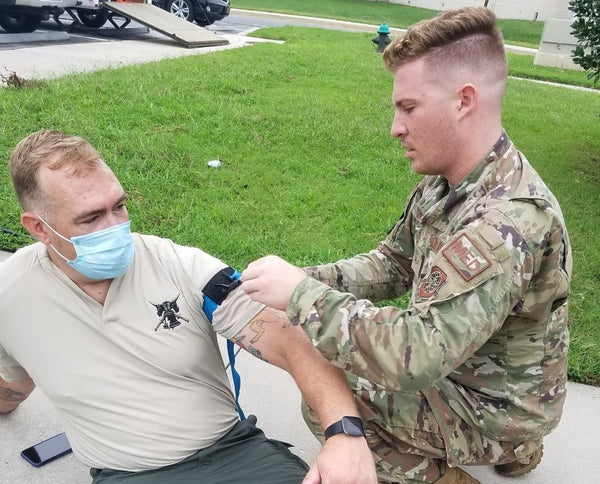
In trauma care, priorities matter. If someone has life-threatening bleeding, control the bleeding first. Apply direct pressure. Pack the wound if trained and appropriate. Apply a tourniquet for severe bleeding from an arm or leg when indicated. Follow your Stop the Bleed or agency training.
The American College of Surgeons Stop the Bleed program emphasizes that anyone can learn basic actions to control severe bleeding, and identifies bleeding as a leading preventable cause of death after injury.
Once major bleeding control has started, do not ignore warmth. Preventing hypothermia is easier than correcting it. Once a trauma patient becomes significantly cold, warming them back up can be difficult, slow, and resource-intensive. In the field, responders often have limited time, limited equipment, and limited environmental control. The better strategy is to prevent additional heat loss from the beginning.
Warm weather is not a safe assumption
One of the most common mistakes is assuming hypothermia is only a winter problem. A trauma patient can become hypothermic on a mild day. The patient may be losing blood, lying still, wet from rain or blood, exposed during assessment, or lying on pavement, metal, tile, dirt, or concrete.
Even in warm weather, the ground can pull heat away from the body. Wind can increase heat loss. Wet clothing accelerates cooling. Shock decreases the body's ability to maintain temperature. A healthy person walking around in a jacket may feel fine. A bleeding trauma patient lying still on the ground is not in the same physiologic condition.
For lay rescuers and BLS providers, the rule should be simple. If the patient is injured badly enough to need bleeding control, EMS, or transport, assume the patient is at risk for getting cold.
A healthy person walking around in a jacket may feel fine. A bleeding trauma patient lying still on the ground is not in the same physiologic condition.
What lay rescuers can do
You do not need advanced medical equipment to help prevent hypothermia. You need awareness and action. After calling 911 and controlling life-threatening bleeding, focus on reducing heat loss.
Get something under the patient
The ground steals heat. Pavement, concrete, tile, metal, and wet grass can quickly pull away warmth. Place something between the patient and the ground when it is safe to do so. A blanket, coat, tarp, sleeping bag, cardboard, floor mat, backpack, foam pad, or emergency blanket all work.
Do not move a patient unnecessarily if you suspect serious spine, pelvic, or major trauma, unless there is an immediate danger. Even without moving the whole patient, you may be able to slide insulation under part of the body or place material around exposed areas.
Cover the patient
Use whatever is available. Coats, blankets, towels, foil emergency blankets, sweatshirts, jackets, tarps, sleeping bags. Cover the patient's torso, head, and limbs when possible. The goal is to trap heat and reduce exposure. Do not cover the face in a way that blocks breathing or prevents you from monitoring the patient.
Keep the patient dry
Wet clothing increases heat loss. If clothing is soaked and dry coverings are available, cover the patient with dry material. If trained responders are present, they may remove wet clothing while preserving privacy and preventing unnecessary exposure. For lay rescuers, the key principle is simple. Wet plus injured equals higher risk.
Protect from wind and weather
Wind and rain can rapidly worsen heat loss. Use vehicles, walls, people, tarps, umbrellas, or barriers to shield the patient from wind and rain. Even a small windbreak can help.
Minimize unnecessary exposure
Responders often need to expose injuries to find bleeding and assess the patient. That is appropriate. Once the assessment or treatment is complete, cover the patient again. A good trauma principle is to expose to assess, then cover to protect.
Recheck after movement
Patients get moved from the ground to a stretcher, from a stretcher to an ambulance, from an ambulance to the emergency department, or from one area to another during a large incident. Every move can dislodge blankets, expose skin, loosen foil wraps, or place the patient back onto a cold surface.
Just as tourniquets and dressings should be reassessed after movement, so should hypothermia prevention. After every move, ask whether the patient is still covered, insulated, and protected from the environment.
What BLS providers should emphasize
For EMTs, EMRs, firefighters, and other BLS-level responders, hypothermia prevention should be built into the trauma routine. It should not be an afterthought. It should happen early and be reassessed often.
Include hypothermia prevention in the primary trauma flow
A practical BLS mental model includes scene safety, massive bleeding control, airway and breathing assessment, circulation and shock recognition, hypothermia prevention, rapid transport when indicated, and continuous reassessment. In many trauma systems, hypothermia prevention is integrated into hemorrhage control and shock management because the problems are connected.
Do not wait until the patient feels cold
By the time a trauma patient feels cold, shivers intensely, or shows obvious signs of hypothermia, the problem may already be developing. Prevention should start before obvious hypothermia appears.
Package the patient intentionally
Good trauma packaging is not only about immobilization or movement. It is also about temperature management. BLS providers should think in layers. Insulation underneath. A dry covering over the patient. Wind and rain protection. Minimal skin exposure. A warm ambulance environment when practical. Reassessment after transfers.
Keep bleeding control visible and accessible
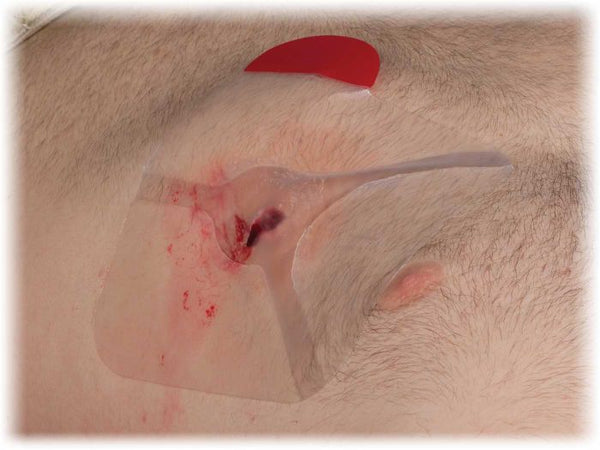
When covering a trauma patient, do not bury critical interventions in a way that prevents reassessment. Tourniquets should remain visible when possible. Dressings should be accessible for reassessment. Chest seals, airway positioning, and breathing status must still be monitored. The goal is to protect warmth while preserving access to lifesaving interventions.
Communicate it during handoff
Hypothermia prevention belongs in the patient handoff. Examples that work:
- "Major bleeding controlled with a tourniquet. Patient was placed on a blanket and covered with a hypothermia wrap."
- "Patient was wet on arrival. Wet outer layer removed and dry blanket applied."
- "Patient was found on cold pavement. Insulation was placed under the patient before transport."
- "Patient remained covered after movement to the stretcher. Tourniquet remains visible."
This kind of handoff reinforces that warmth was treated as a trauma priority, not an afterthought.
Shock prevention and hypothermia prevention go together
Many people have heard the phrase "treat for shock." In older first-aid terminology, that often meant laying the person down and keeping the patient warm. The modern trauma version is more specific. Control bleeding, support airway and breathing, prevent heat loss, and get the patient to definitive care.
Shock prevention is easier than shock treatment. The same is true for hypothermia. Once the body is deep into shock and hypothermia, the patient is much harder to stabilize. The clotting system is impaired. Oxygen delivery is reduced. The heart and brain are under stress. Survival becomes more difficult.
That is why simple early actions matter. A blanket may not look as dramatic as a tourniquet, but in trauma care both may be part of the same lifesaving chain.
A blanket may not look as dramatic as a tourniquet, but in trauma care both may be part of the same lifesaving chain.
Common mistakes to avoid
- Waiting too long to think about warmth. Do not wait until EMS arrival to start hypothermia prevention.
- Only covering the top of the patient. Insulation underneath is also important.
- Leaving the patient exposed after assessment. Expose what is needed, then cover again.
- Forgetting after movement. Blankets and wraps shift. Recheck after every move.
- Thinking warm weather means no risk. Trauma hypothermia can happen indoors, outdoors, in mild weather, and in warm climates.
- Covering critical interventions without reassessment. Keep tourniquets, dressings, airway positioning, and breathing status accessible.
Practical trauma warmth checklist
After life-threatening bleeding is controlled:
- Call 911 or confirm EMS activation.
- Keep the patient still unless there is immediate danger.
- Place insulation between the patient and the ground if possible.
- Cover the patient with blankets, coats, or emergency blankets.
- Keep the patient dry or cover with dry materials.
- Shield from wind, rain, and cold surfaces.
- Minimize unnecessary exposure.
- Keep bleeding control interventions visible and reassessable.
- Recheck warmth after every move.
- Tell EMS what you did.
What should be in trauma and bleeding control kits
A good bleeding control kit should not only focus on stopping blood loss. It should also help prevent heat loss. Useful items include nitrile gloves, a tourniquet, hemostatic or plain wound-packing gauze, a pressure dressing, trauma shears, a marker, chest seals (depending on kit level and training), and an emergency or hypothermia blanket.
Stop the Bleed kit guidance includes an emergency blanket to keep trauma patients warm while waiting for EMS. This is a practical point for schools, houses of worship, workplaces, sports venues, event sites, ranges, construction sites, and public safety vehicles. If you stock bleeding-control supplies, also stock something to prevent hypothermia.
The bottom line
In trauma care, keeping the patient warm is not optional. It is not just comfort care. It is part of survival care. Severe bleeding must be controlled immediately. Airway and breathing problems must be recognized and managed within the rescuer's scope and training. Once those immediate life threats are addressed, hypothermia prevention should happen early.
The good news is that keeping a trauma patient warm is simple, low-cost, and within reach of almost everyone. You do not need to be a surgeon, paramedic, or trauma specialist to help. You can put a blanket under the patient, cover the patient, keep the patient dry, shield the patient from wind and rain, recheck after movement, and tell EMS what you did.
In a trauma emergency, simple actions done early can change outcomes. Control the bleeding. Support breathing. Keep the patient warm. Prevent the downward spiral before it starts.
Works Cited
- American College of Surgeons. STOP THE BLEED. American College of Surgeons. Accessed 7 May 2026.
- Casella, John, et al. EMS Tactical Paramedic Lethal Triad. StatPearls, National Library of Medicine, 2024. Accessed 7 May 2026.
- Mayo Clinic Staff. Hypothermia: Symptoms and Causes. Mayo Clinic, Mayo Foundation for Medical Education and Research. Accessed 7 May 2026.
- van Veelen, Martijn J., et al. Hypothermia in Trauma. International Journal of Environmental Research and Public Health, vol. 18, no. 16, 2021, article 8719. Accessed 7 May 2026.
- Vardon, F., et al. Accidental Hypothermia in Severe Trauma. Anesthesia Critical Care and Pain Medicine, vol. 35, no. 5, 2016, pp. 355-361. Accessed 7 May 2026.
Field Notes content is written by active practitioners and reviewed for accuracy at the time of publication. Medical protocols, clinical guidelines, and agency standards evolve. Always verify against your current local protocols and medical director guidance before applying anything in the field. If content has been updated since original publication, changes will be noted within the article.