National Stop the Bleed Day 2026: ten years in, the community is the program.

Today is National Stop the Bleed Day. The 9th annual observance takes place on Thursday, May 21, 2026, scheduled inside EMS Week to recognize that the chain of survival in severe extremity hemorrhage runs from bystander to first responder to EMS to definitive care. This year's theme is "Minutes Matter." It is the right theme. Severe bleeding can produce death in less time than it takes for EMS to arrive, and the people who fill that gap are the civilians, coworkers, neighbors, and bystanders who learn how.
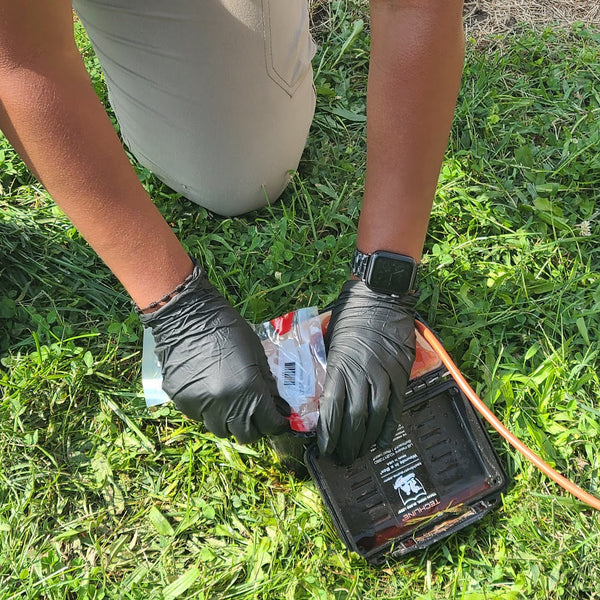
Last night Penn Tactical Solutions presented a Stop the Bleed class hosted by Newportville Fire Company #1 in Bristol Township, Pennsylvania. Thirty-two community members attended, including members of Newportville Fire Company #1, members of Croydon Fire Company, Station 11 who drove over to participate, and fire department EMTs who were there to refresh their bleeding control skills. Volunteer firefighters who wanted to refresh their skills. Parents who wanted to know what to do if something happened to their kids. Neighbors who had heard about the program and decided this was the year they would take it. People who work in offices, schools, and shops, who showed up after their workday to spend two hours learning how to recognize life-threatening hemorrhage, how to apply direct pressure, how to pack a wound, and how to apply a commercial tourniquet.
The class represented the full chain of survival in one room. Civilians who would be first on scene before any responder arrived. Volunteer firefighters who would be first responders on most calls in their coverage areas. EMS providers who would be the next link in the chain after the first responders. Everyone trained on the same skills, on the same night, working through the same curriculum. The chain is only as strong as the bystander who recognizes the bleeding in the first thirty seconds.
Newportville Fire Company #1 has been protecting Bristol Township and the surrounding Bucks County communities since 1927, approaching a century of volunteer fire and rescue service. Croydon Fire Company has been serving Croydon and providing mutual aid to neighboring Bristol Township, Bristol Borough, and Bensalem Townships since 1918, more than a century of continuous volunteer service. Both departments run on community commitment rather than payroll. The members give their nights, weekends, and holidays to public-safety work that does not pay. Opening their station to a Stop the Bleed class, or driving over to a neighboring department's class to participate, is part of that same commitment. The training does not generate revenue. It does not respond to a specific call type either department runs. It is public-safety education offered to community members because the community is what these departments exist to serve. Hosting and attending the class is the kind of work that does not appear in the response statistics but is genuinely the same work, just measured on a longer timeline.
The class continued through two fire calls. Heavy storms moved through Bucks County during the evening, and both departments had members responding to weather-related incidents while the training was underway. Firefighters left the class to run the calls. Every one of them came back to complete the training, even though it meant the class ran later than scheduled. That is the volunteer fire service in microcosm. People committed to learning how to save lives, on the same night, in the same building, who were simultaneously running active emergency calls and finishing a training session on bleeding control. The work runs concurrently because the work has to. And when the calls cleared, the firefighters returned to finish what they started.
That is the program. The class at Newportville is one example out of hundreds happening across the country this week. Stop the Bleed has trained millions of civilians since the program launched in October 2015. The cumulative effect of that training shows up in places that do not make the news. A coworker who recognizes arterial bleeding from a workplace accident and applies pressure correctly. A parent at a youth sports event who responds to an injury before the ambulance arrives. A teacher who is the first responder in a classroom incident. The training is invisible until the moment it matters, and then it is the only thing that matters.
The program traces back to Sandy Hook, to the Hartford Consensus that followed it, and to a decade of military medical lessons translated into civilian practice. Penn Tactical Solutions published a Field Notes piece in April covering that origin story in detail, from the first Hartford meetings through the 2015 White House launch and the state-by-state legislative work that continues today. Readers interested in how the program came to exist can find that piece linked below.
National Stop the Bleed Day is the program's annual public-recognition window. The American College of Surgeons, the Hartford Consensus working group, and the Department of Defense Stop the Bleed program coordinate awareness, host instructor-led classes, and encourage workplaces and institutions to ensure their bleeding control kits are stocked, accessible, and accompanied by trained personnel. This year's observance includes the second annual Stop the Bleed Trainathon, a month-long call to action for the public to take an approved Stop the Bleed training course during May.
Scheduling the day inside EMS Week is deliberate. EMS Week, observed May 17-23 this year, recognizes the work of emergency medical services across the country. Stop the Bleed Day sits inside that recognition window because the program's purpose is the moment before EMS arrives. Bystanders who can recognize hemorrhage and intervene with direct pressure or a tourniquet cover the window that nothing else can cover. EMS providers who arrive to a controlled bleed instead of an exsanguinating one have a different patient to work with. The two programs reinforce each other, and the calendar reflects that.
Severe extremity hemorrhage can produce death within minutes. EMS response times in urban areas average seven to ten minutes. In rural areas, response times routinely exceed twenty minutes. The window between injury and EMS arrival is the window where bystander intervention saves lives. A bystander who can recognize hemorrhage and apply direct pressure or a tourniquet covers that window in a way that nothing else can.
For Stop the Bleed Day itself, the call to action is simple. If you have not taken a class, take one. If you have, refresh your skills. If your workplace, school, place of worship, or community organization does not have a bleeding control kit in an accessible location, get one. If it does, check the seals, check the inventory, and check that someone knows how to use what is in it.
Stop the Bleed works because of the people who show up. The instructors who give their time to teach. The host organizations that provide the space and bring the community in. The civilians who decide that being able to help is worth two hours of their evening. The volunteer firefighters who finish a fire call and come back to finish the training. The EMS providers who add formal bleeding control training to skills they already practice in the field. The volunteer firefighters, EMS providers, and trauma surgeons whose advocacy built the program in the first place. The community is the program.
Minutes matter. The program's theme this year names the entire reason it exists. Penn Tactical Solutions thanks the thirty-one community members who attended the Newportville class last night, the members and leadership of Newportville Fire Company #1 for hosting and for nearly a century of service to Bristol Township, the members of Croydon Fire Company, Station 11 who drove over to participate and for their 108 years of continuous volunteer service to Croydon and the surrounding communities, the fire department EMTs who attended to refresh their bleeding control skills, the EMS providers working through EMS Week, and every Stop the Bleed instructor across the country teaching the program this week. Ten years in, the work continues, and the community is the reason it continues to work.